
 8902235337
Foods to Avoid After Embryo Transfer for a Healthy IVF Journey
July 20, 2026
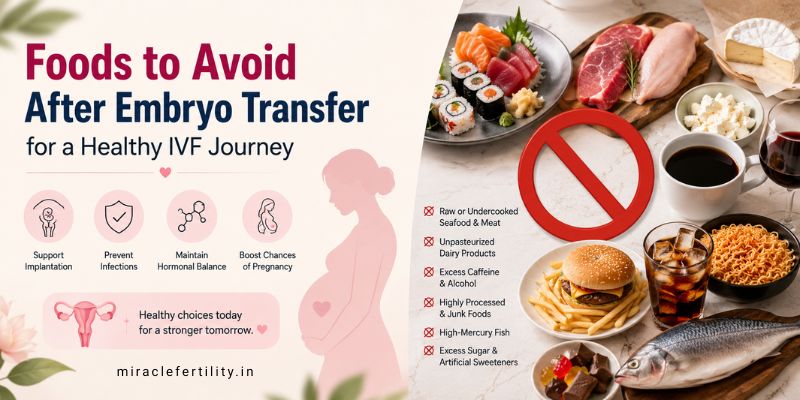
In the IVF (In Vitro Fertilization) journey, embryo transfer is among the most important stages. It comes after weeks of scans, medications and emotional upheaval. This stage is a time for both anxiety and hope. Although hormonal support and medical care are highly supportive, dietary choices and lifestyle after embryo transfer can also have a significant impact on improving overall health.
It is impossible to ensure the success of implantation or pregnancy with a single food. However, it can be quite risky to have specific foods. These can increase the risk of inflammation, infection or hormonal imbalance, which should be avoided during this delicate stage. If you want to support your body and create a conducive environment for implantation, these are some of the foods that you should avoid after embryo transfer.
It is a good idea to avoid raw fish products such as:
• Sushi,
• Sashimi, and
• Undercooked meat
These are known to have harmful bacteria and parasites such as salmonella, listeria and toxoplasma. During early pregnancy, such infections can be quite harmful. These can have a negative impact on embryo development.
Following embryo transfer, due to medications, your immune system may also go through slight changes. It is safer for you to consume well-cooked seafood and fully cooked lean meats, which can help you to reduce the risks of having foodborne illness.
You may suffer from infection due to listeria bacteria when you consume unpasteurized milk and soft cheeses like:
• Brie,
• Camembert,
• Feta and
• Blue cheese
During early pregnancy, there can be serious complications due to Listeriosis, including risks of miscarriage.
Instead, you should have pasteurized dairy products like yogurt, milk and hard cheeses. You can get enough protein and calcium, with no associated risks of infection.
According to many fertility specialists, it is important to limit the intake of caffeine after embryo transfer. High caffeine consumption may negatively impact hormonal balance and potentially affect implantation. Moderate caffeine intake is generally regarded to be safe. During IVF, however, excessive intake is not recommended.
It is better that you try to reduce your consumption of coffee, strong tea, energy drinks and cola. If you enjoy warm beverages, switch to caffeine-free alternatives or herbal teas that are approved by your doctor.
During IVF treatment as well as after embryo transfer, alcohol intake is strongly discouraged. Even if you consume small amounts, it can have a negative impact on your liver function, hormone levels and overall reproductive health. As implantation occurs during this period, alcohol intake may reduce the chances of a successful pregnancy.
It is best that you avoid alcohol completely until you get your pregnancy test results and even beyond, in case pregnancy is confirmed.
You should also stay away from foods such as:
• Chips,
• Instant noodles,
• Packaged snacks,
• Fried fast food, and
• Sugary desserts
These are high in unhealthy fats, sodium and artificial additives. Foods like these can promote inflammation and lead to insulin spikes, which can have a negative impact on hormonal balance.
Rather, you should focus on having fresh fruits, vegetables, whole grains and healthy fats like nuts and seeds. Packed with essential nutrients, these can help to maintain your energy levels and support your body during the recovery stage.
Some types of fish have high levels of mercury, which can cause harm to developing fetus. You should try to avoid fish such as shark, swordfish, king mackerel and tilefish.
If you wish to have seafood, go for low-mercury options like salmon, sardines, trout and shrimp. Before having them, you should cook them properly.
Having too much sugar can increase inflammation. You may also suffer from insulin imbalance. These can negatively impact your fertility and pregnancy. Also stay away from diet sodas and sugar-free packaged foods that are packed with artificial sweeteners. It may not be good to have them during this sensitive stage.
Rather, go for natural sweetness from fruits, honey (in moderation) or dates if you crave something sweet.
Your body is physically delicate after embryo transfer. By avoiding risky foods and having a balanced diet consisting of fresh fruits, healthy fats, vegetables, whole grains and lean proteins, you can boost your overall health and maximize your chances of a successful pregnancy.
September 30, 2025
September 29, 2025
September 25, 2025